En Passant Explained: The Chess Rule Everyone Forgets
En passant (French for “in passing”) is a special pawn capture. If a pawn moves two squares forward from its starting square and lands right beside an enemy pawn, that enemy pawn may capture it as if it had only moved one square. It is the only capture in chess where the capturing piece does not end up on the square of the piece it takes.
How en passant works
All of these must be true:
- Your pawn is on its fifth rank (the 5th rank for White, the 4th rank for Black).
- Your opponent moves a pawn two squares from its starting square, so it lands directly beside your pawn.
- You capture on the very next move. If you play anything else, the chance is gone for good.
Your pawn moves diagonally to the square the enemy pawn skipped over, and the enemy pawn is removed from the board.
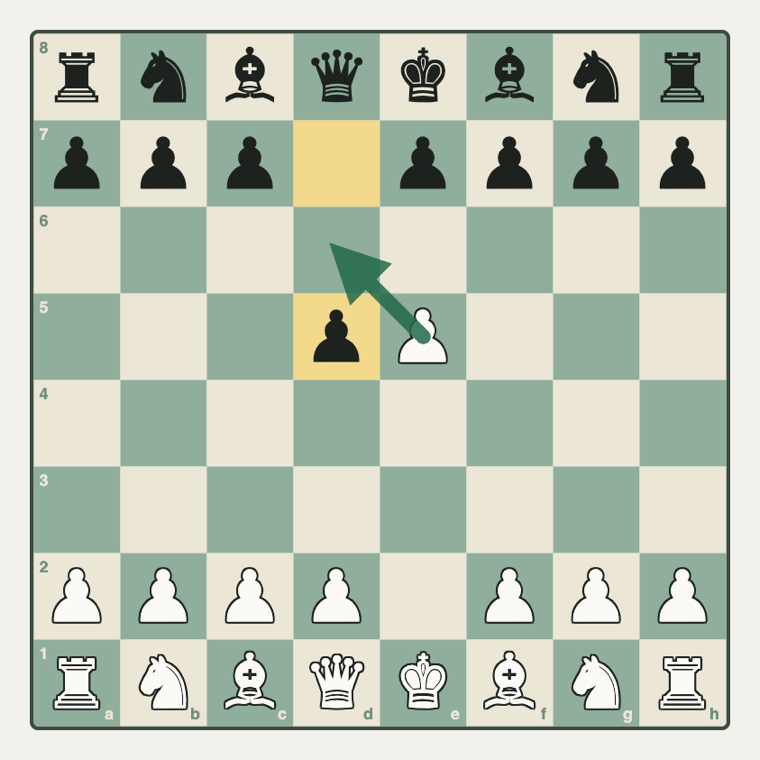
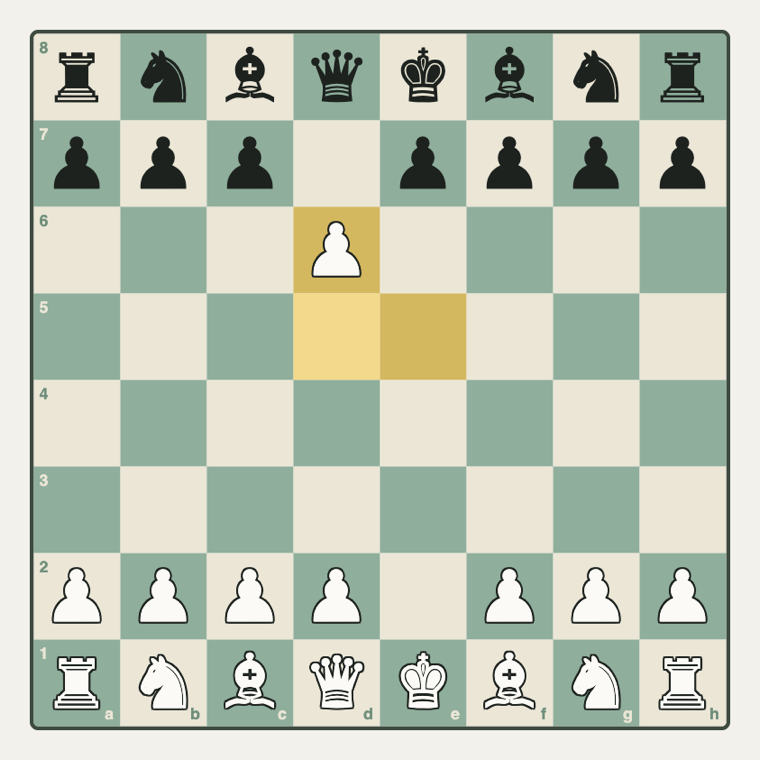
Why the rule exists
Pawns originally moved only one square at a time. When the two-square first move was introduced in Europe in the late Middle Ages, it let a pawn slip safely past an enemy pawn that would otherwise have been able to capture it. En passant keeps that capture possible, so the faster move doesn't remove the old risk.
How to write en passant in notation
You write the move like a normal pawn capture, to the square your pawn lands on. In the example above that is exd6, often with e.p. added: exd6 e.p. See our guide to chess notation for more.
Common questions
Is en passant compulsory?
No. Like any capture it is optional, unless it happens to be your only legal move, in which case you have to play it.
Can any piece capture en passant?
No. Only a pawn can capture en passant, and only an enemy pawn that has just made a two-square move can be captured this way.
Can en passant get you out of check?
Yes, if the pawn that has just moved two squares is the piece giving check, capturing it en passant is a perfectly legal way out of check.
Can I capture en passant a few moves later?
No. The right only lasts for the move immediately after the two-square pawn move.
Now that you know the trickiest pawn rule, read about castling, the other special move, or brush up on how every piece moves.