Chess Piece Names and How Each Piece Moves
Each side starts with 16 pieces: one king, one queen, two rooks, two bishops, two knights and eight pawns. Here is what each one is called and how it moves.
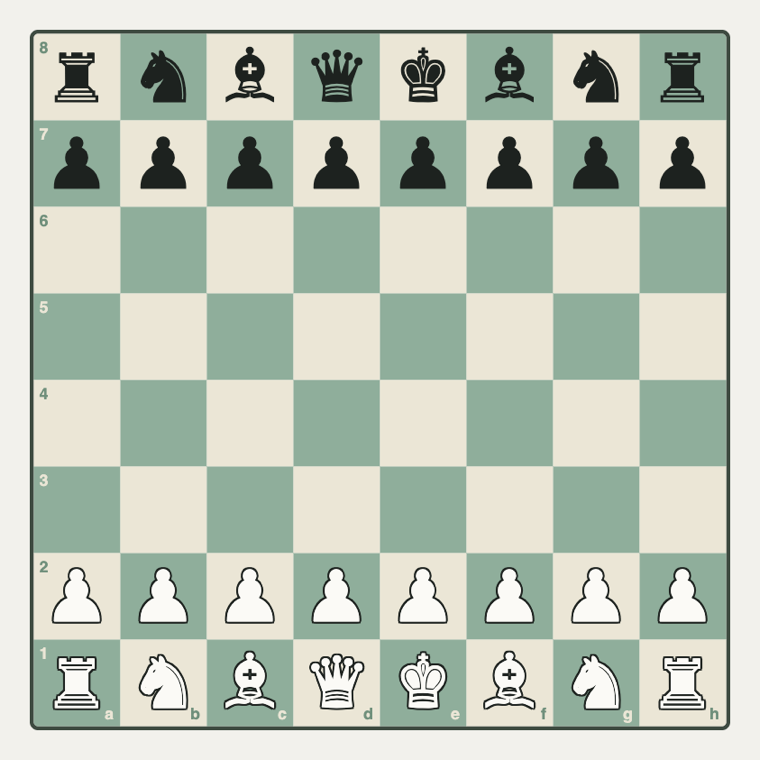
| Piece | Letter | Symbol | How many | Usual value |
|---|---|---|---|---|
| King | K | ♔ ♚ | 1 | Priceless |
| Queen | Q | ♕ ♛ | 1 | 9 |
| Rook | R | ♖ ♜ | 2 | 5 |
| Bishop | B | ♗ ♝ | 2 | 3 |
| Knight | N | ♘ ♞ | 2 | 3 |
| Pawn | (none) | ♙ ♟ | 8 | 1 |
King
The king moves one square in any direction. It can never move onto a square where it would be attacked. If your king is attacked and can't escape, that's checkmate and the game is over. The king also takes part in castling.
Queen
The most powerful piece. The queen moves any number of squares in a straight line: along ranks, files or diagonals, as long as nothing is in the way.
Rook
The rook moves any number of squares along a rank or file (sideways, forwards or backwards). It is sometimes informally called a “castle”, but its proper name is rook.
Bishop
The bishop moves any number of squares diagonally, so it stays on the same colour of square all game. Each side has one light-squared and one dark-squared bishop.
Knight
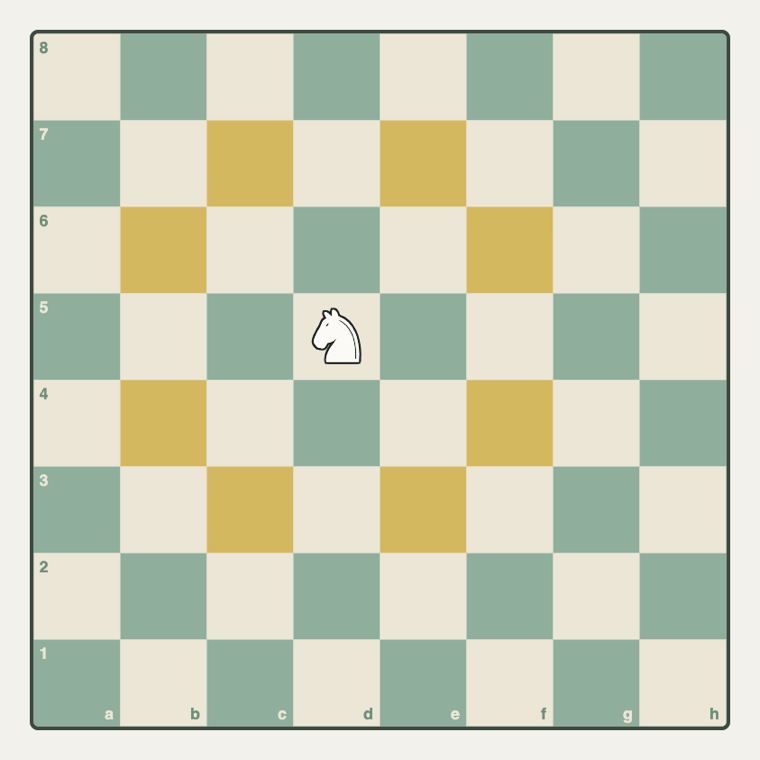
The knight moves in an L shape: two squares in one direction and then one square to the side. It's the only piece that can jump over others. In notation it uses the letter N, because K is already taken by the king.
Pawn
Pawns move one square straight forward, or two squares on their very first move. Unlike every other piece, they capture differently from how they move: one square diagonally forward. Pawns also have two special rules: en passant, and promotion. When a pawn reaches the far side of the board it must be turned into a queen, rook, bishop or knight (almost always a queen).
Where the pieces go
See our step-by-step guide to setting up a chess board, and how much each piece is worth in chess piece values. If you want to type the symbols yourself, read chess symbols in Unicode.